Before thinking about flats, neighbourhoods, or social life, there's a pretty basic question you need to sort out first: how do I actually get to Madrid?
IN THIS GUIDE
Agrega un encabezado para comenzar a generar la tabla de contenidos
Whether you’re coming from abroad by plane or moving around within Spain by train or bus, here are all your options for getting to Madrid, with times, prices, and tips to make your landing (literal or figurative) as smooth as possible.
Flying to Madrid: Adolfo Suárez Madrid-Barajas Airport
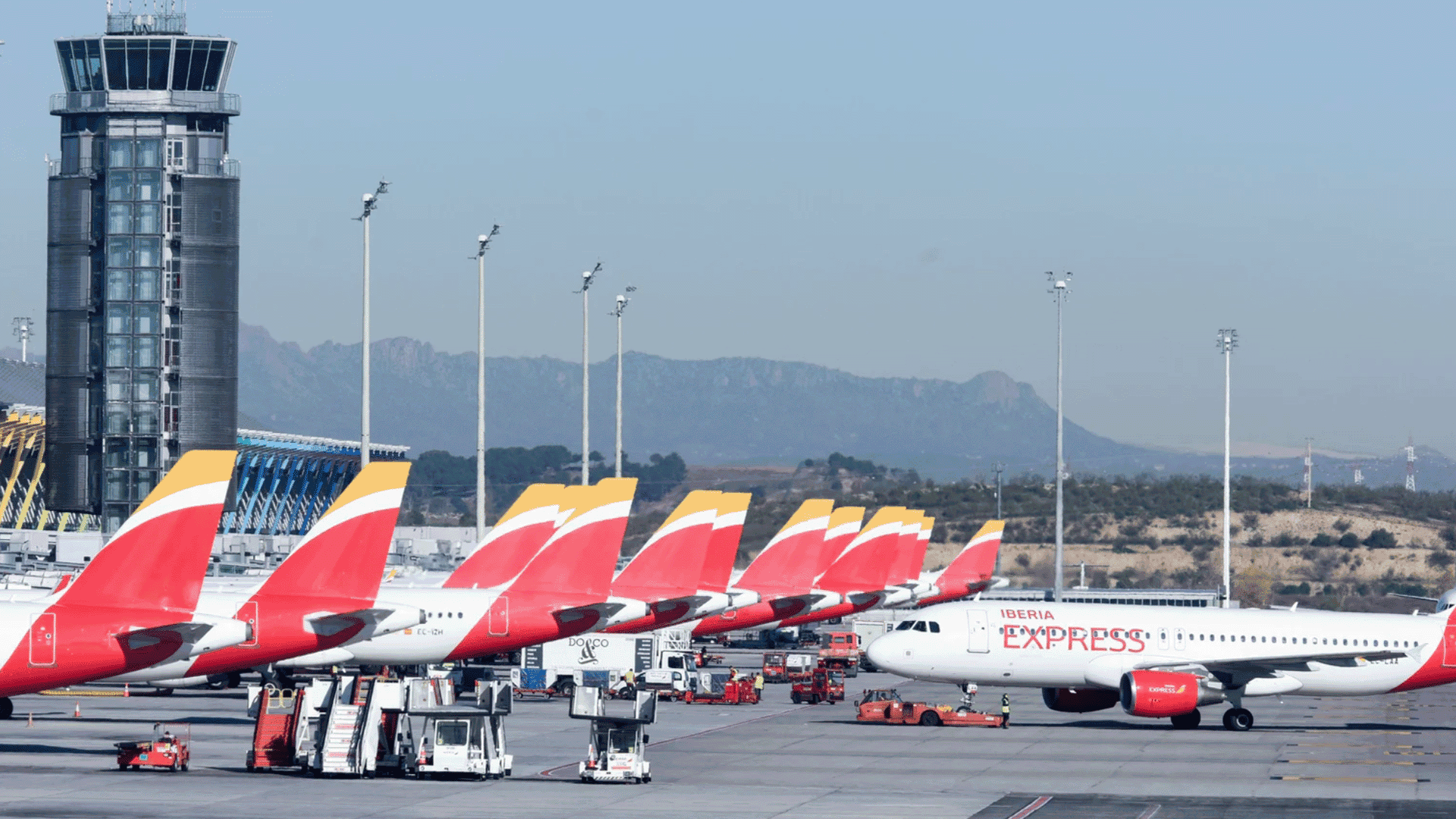
If you’re coming from outside Spain, chances are you’ll land at Adolfo Suárez Madrid-Barajas Airport, one of the largest and busiest in Europe. It’s just 13 kilometres from the centre (Puerta del Sol), and has four terminals (T1, T2, T3 and T4), all well connected by public transport.
Random but cool fact: over 50 million passengers pass through here every year, so you’re definitely not the only one arriving a bit lost and looking for the way to the metro.
Flight prices to Madrid: how much will it cost me?
Domestic flights within Spain: from €12 on offer, up to €250 during high demand periods.
Flights from other European cities: between €20 and €500, depending heavily on the airline and how far in advance you book.
Flights from the US, Canada, Latin America, Oceania or Asia: expect to pay between €600 and €1,400.
📌 Tip: book in advance and compare several airlines. The price range is so wide that booking early versus last minute can mean a difference of hundreds of euros.
How to get from Madrid Airport to the city centre
Once you land, you’ve got several ways to reach the centre. Here’s the full rundown:
Metro (line 8)
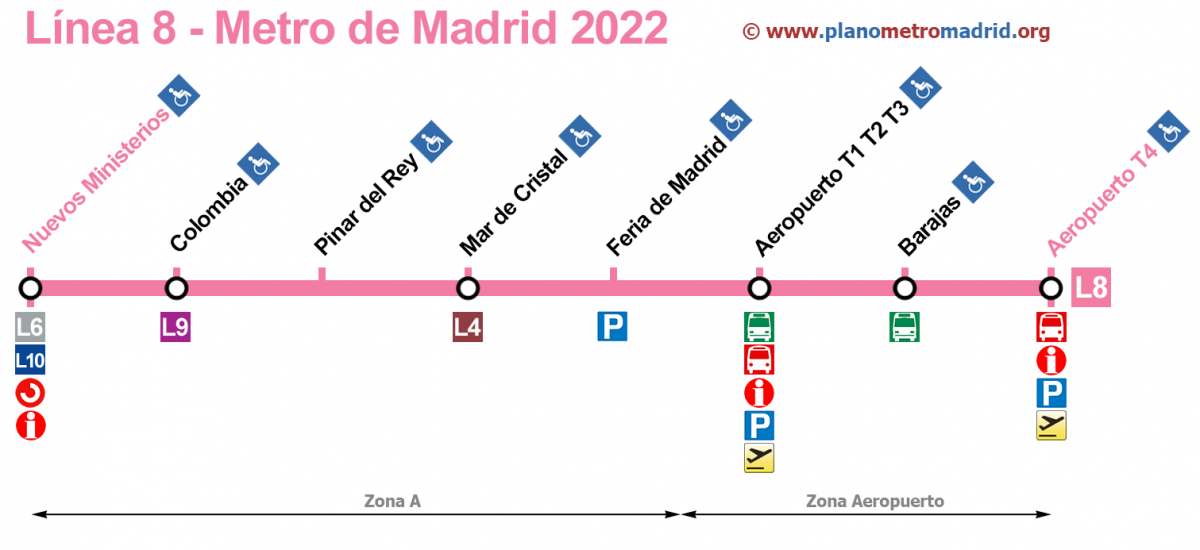
The fastest and cheapest way to reach the centre. Line 8 (pink) connects terminals T2 and T4 with Nuevos Ministerios station, right in Madrid’s financial district.
Duration: 15-20 minutes to Nuevos Ministerios.
Price: between €4.50 and €5 (single ticket, airport supplement included).
Operating hours: roughly 6:05 a.m. to 1:30 a.m.
From Nuevos Ministerios you can transfer to other metro lines or to Cercanías to continue on to your final destination.
Cercanías (Renfe)
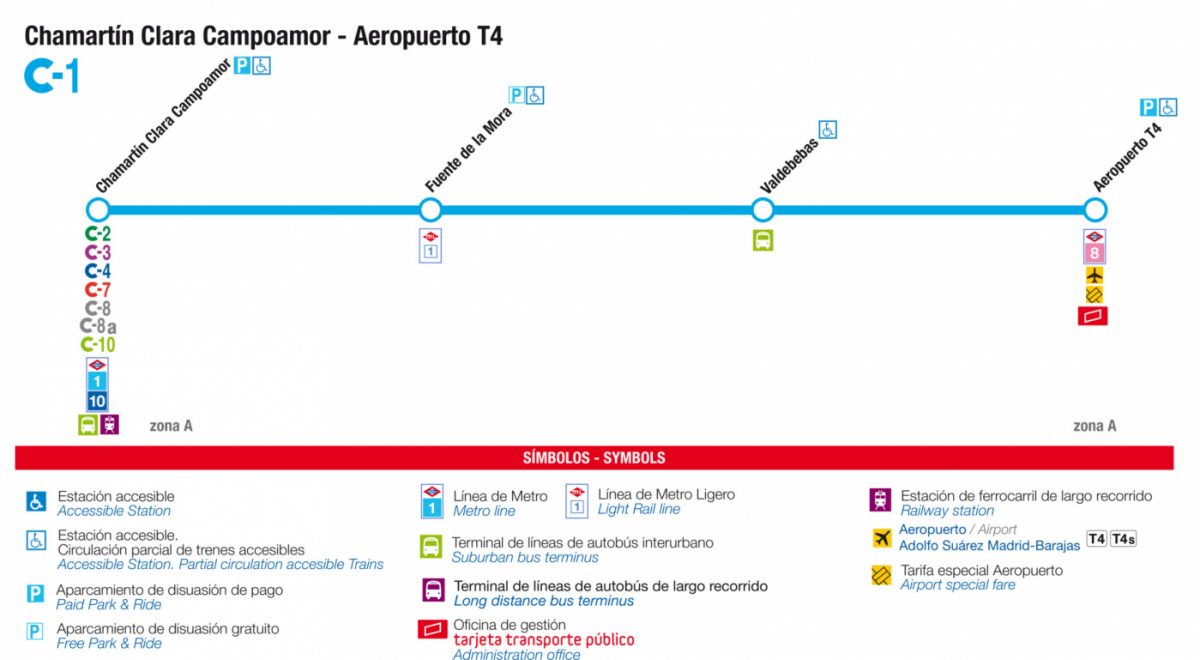
If your flight lands at T4, you’ll find the Cercanías station right there, on the C1 line. It connects directly to Chamartín, Nuevos Ministerios, Atocha and Príncipe Pío.
Journey time to Atocha: around 25 minutes.
Price: from €2.60.
This is a great option if your flat or residence is near one of the main train stations.
Airport Express bus (line 203)
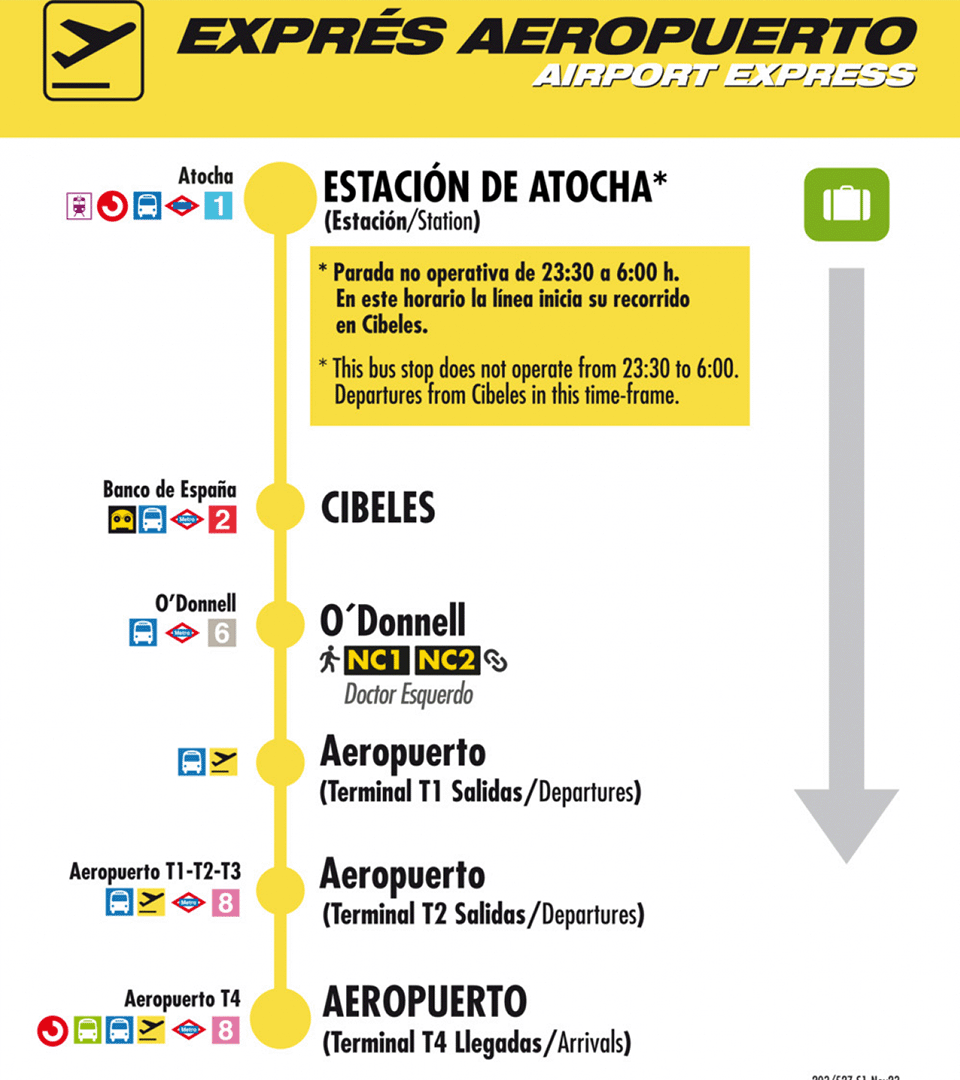
The Airport Express connects the airport with the centre with no transfers required.
Runs: 24 hours a day, every day of the year.
Main stops: O’Donnell, Plaza de Cibeles, and Atocha (the latter daytime only).
Price: €5 per journey.
Duration: between 30 and 40 minutes, depending on traffic.
There are also more «regular» bus lines (200, 101, and the night route N27), though these tend to be less direct and a bit slower.
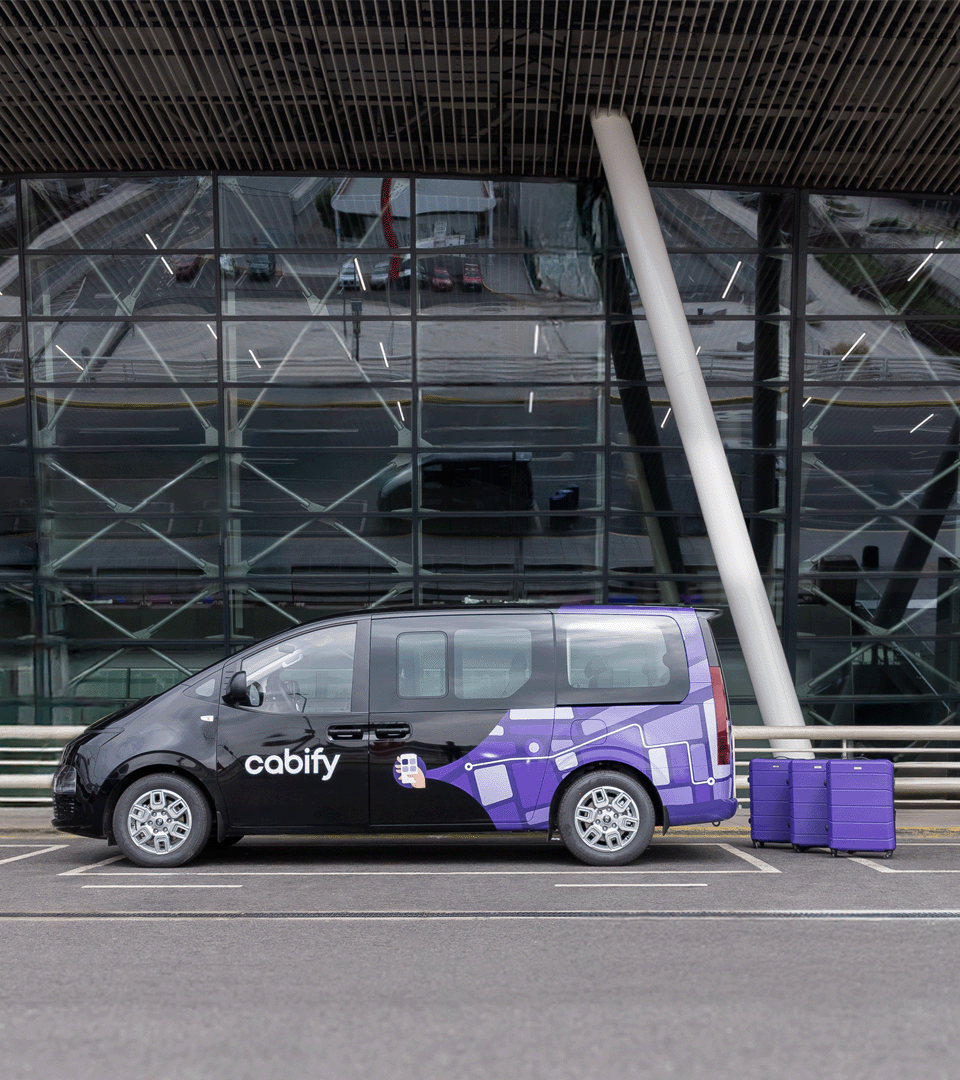
Taxi and ride-hailing (Uber, Bolt, Cabify)
If you’d rather go door to door without any hassle, taxis and ride hailing apps are available at all terminals, 24 hours a day.
Taxi: usually around €25-30 to the centre (many taxis run a fixed airport-to-centre rate).
Ride-hailing: similar or slightly lower prices during off-peak hours, booked straight from the app.
This is your best bet if you’re arriving late at night, have a lot of luggage, or are travelling with others and want to split the cost.
Car hire at the airport
If you fancy total freedom to explore, want to visit nearby cities, or your accommodation is on the outskirts, hiring a car at Barajas is worth considering. All terminals have rental desks from various companies, and booking online in advance is usually cheaper than doing it at the counter on arrival.
Main roads from the airport: M-40, M-11, A-2 or Avenida de América, with journeys of 20-30 minutes to the centre depending on traffic.
How to get to Madrid by train
If you’re travelling within Spain, the train is usually the fastest option for reaching Madrid from other major cities:
Barcelona-Madrid: around 2h30 by AVE.
Valencia-Madrid: nearly 2 hours.
Zaragoza-Madrid: an hour and a half.
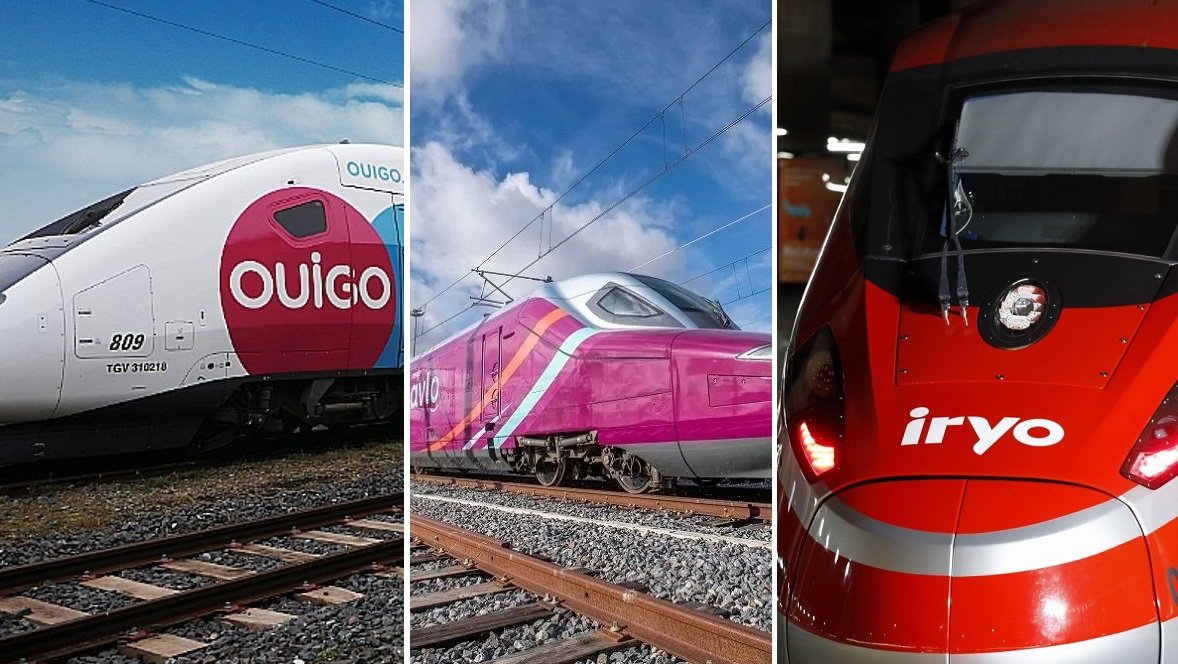
You can travel with Renfe, OUIGO or Iryo, among others, which means there’s plenty of room to compare prices and schedules. Trains drop you off at Atocha or Chamartín, both within the city and perfectly connected to metro and Cercanías.
Indicative price: from €15 on offer, though during high-demand dates you could end up paying up to €150.
How to get to Madrid by bus
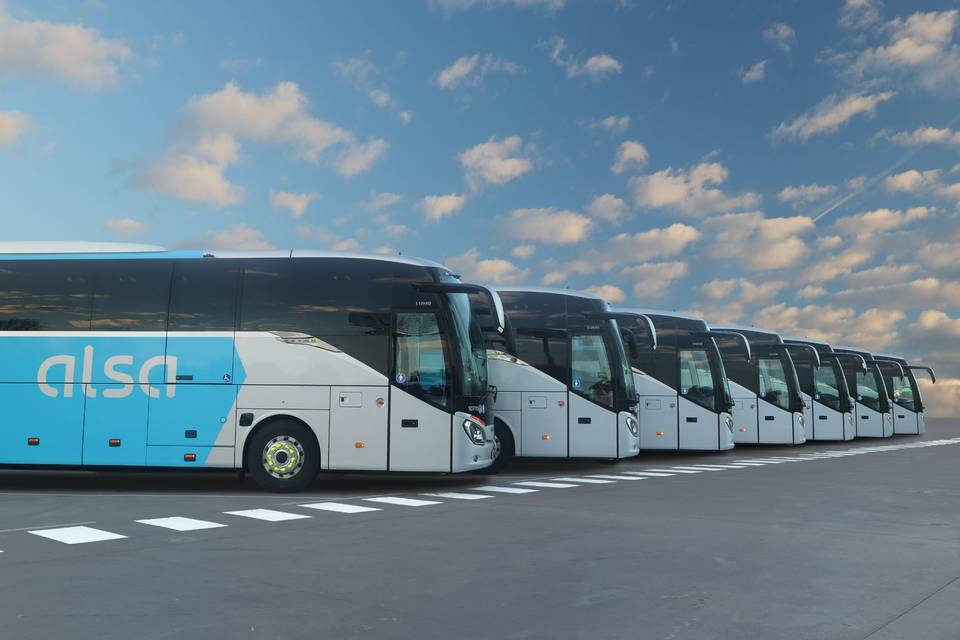
If budget comes first and you don’t mind taking a bit longer, the bus is your best ally. ALSA is the company with the biggest presence on this route, though other operators run it too. A direct Barcelona-Madrid route, for example, takes around 7 hours, with several departures a day.
Long-distance buses mainly arrive at:
Estación Sur (Méndez Álvaro)
Avenida de América
Plaza Elíptica
Príncipe Pío
Moncloa
All of these stations have metro access, and some also have Cercanías, so reaching the rest of the city from any of them is straightforward.
How to get to Madrid by car
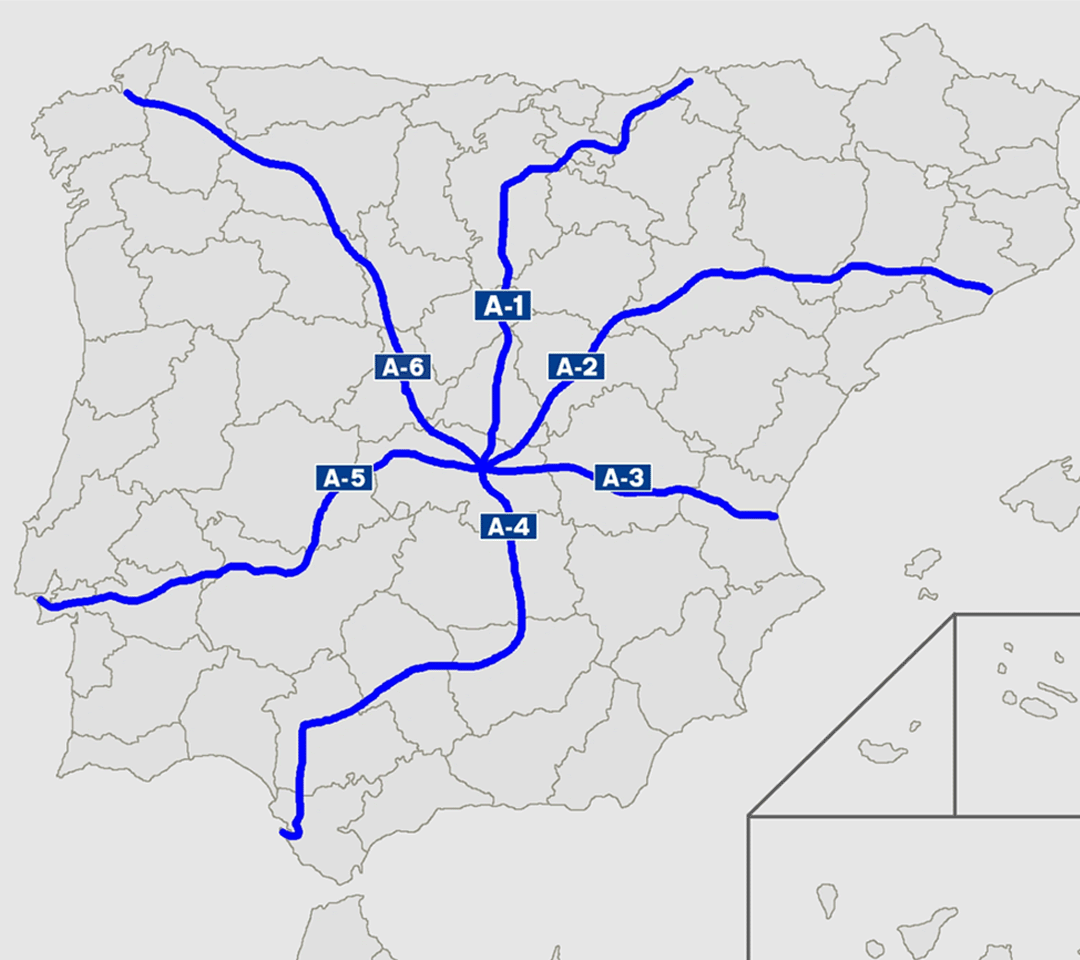
If you’d rather drive, Madrid is connected to the rest of Spain via six main motorways:
From the north → A-1
From the northeast (Zaragoza-Barcelona) → A-2
From the east (Valencia) → A-3
From the south (Córdoba-Sevilla) → A-4
From the southwest (Extremadura-Portugal) → A-5
From the northwest (Castilla y León-Galicia) → A-6
As you get closer to the city, you’ll run into the famous ring roads:
M-50: the outermost one, ideal if you want to go around Madrid without entering.
M-40: intermediate, handy for choosing the most convenient access to your area.
M-30: the innermost one, circling the centre with a mix of surface sections and long tunnels.
If your destination is outside the centre, the most practical approach is to go around the city on the M-50 or M-40 and enter via whichever access suits you best. If you’re headed to the centre, use the M-30 to get close and exit at the most logical branch towards your area.
⚠️ Watch out for the Low Emission Zone (ZBE)
Before driving into Madrid, it’s important to know whether your vehicle is allowed to circulate:
No environmental badge (category A): since 2025 you can’t access or drive through a large part of the municipality.
Badge B, C, ECO or CERO: you can drive as normal, though it’s always worth checking current conditions in case of specific restrictions due to high pollution.
If you’d rather avoid any hassle, a good strategy is to park near a Metro or Cercanías station on the outskirts and continue into the centre by public transport.
Indicative price by car: between tolls, petrol, and the area you’re travelling from, the trip shouldn’t normally exceed €140 in total.
Price comparison: what’s the cheapest way to get to Madrid?
Option
Indicative price
Time
Train
€15 – €150
Fast, drops you right in the centre
Bus
Usually cheaper than the train
Slower (several hours)
Plane
€12 – €1,400 depending on origin
Fast, but add extra time (transfers, checks)
Car
Up to around €140
Variable depending on traffic and tolls
If time matters more than money, the train is usually the best combination of speed and comfort, since it drops you right in the centre. If budget comes first, the bus wins almost every time. And if you’re coming from outside Spain, the plane is your only real option, though the price can be a real lottery depending on dates and airline.
F&Q
What's the fastest way to get from Madrid airport to the city centre?
The metro (line 8) is the fastest and cheapest option, reaching Nuevos Ministerios in 15-20 minutes.
How much does a taxi from Madrid airport to the centre cost?
Usually around €25-30, depending on traffic and time of day.
Can I drive any car into Madrid?
No. Since 2025, cars without an environmental badge (category A) can't access a large part of the municipality due to the Low Emission Zone.
Is it better to come to Madrid by train or by bus?
The train is faster and more comfortable, but the bus is usually cheaper. It depends on whether you prioritise time or budget.
How long does the AVE from Barcelona to Madrid take?