Granada is small, but the right neighbourhood can still make or break your daily routine. In this guide we’ll tell you where to look for a room, how to spot and avoid the scams that target students every year, and which are the best neighbourhoods to live in as a Erasmus student in Granada.
Where to look for accommodation?
We’ll tell you exactly where it’s worth focusing your efforts to find a flat quickly, without wasting time on places that won’t get you results.
WhatsApp groups
Many landlords also join WhatsApp groups to post their rooms, since they know they’ll find an audience made up almost entirely of Erasmus students looking for a flat, with no middlemen involved.
At Erasmus Touch, we’ve set up our own group so students and landlords can connect directly. Just join through the link, introduce yourself briefly, and let everyone know what you’re after (city, budget, dates…). From there, either someone will message you privately with an offer, or you’ll simply be kept in the loop in real time whenever a landlord posts a new listing.
👉 Join the Housing Granada group

Facebook groups
Most landlords who rent out on their own (without going through an agency) tend to be from an older generation, and that’s why they still mainly use Facebook groups to post their rooms. If you go to the Facebook search bar and type in keywords like rooms, erasmus, Granada or students, you’ll find dozens of groups specifically dedicated to searching for and posting flats.
Idealista, Fotocasa and Milanuncios
The number one go-to websites for finding a room in Spain. Here you’ll find hundreds of options available at any given time, from both private landlords and real estate agencies. You can filter by city, price, area and type of accommodation, so the whole process really just comes down to narrowing your search well and reaching out to whoever has what you need.
Get in touch with Ex-Erasmus students
Another source many people overlook: talk to students who already did their Erasmus in the city you’re heading to, especially if they’ve just finished theirs. They often have first-hand information about flats becoming free right as they move out.
Search our Erasmus Touch group or our Instagram, or simply ask around in forums and chats from your own home university to see if anyone was already in that city the year before. A direct message asking «do you know if your flat is becoming free?» can save you weeks of searching, and gives you the peace of mind of renting something you already know about first hand from someone who actually lived there.
At your own university
Don’t underestimate your university’s noticeboard (physical or online). Sometimes rooms get posted there directly by other students or local landlords, and in many cases the university has agreements with residences or agencies that give you access to accommodation already checked and verified by the institution itself, an extra layer of security against potential scams.
How to avoid scams when looking for a flat for your Erasmus
Can you imagine arriving in your Erasmus city convinced you had a room booked, only to discover it never actually existed? That would be a disaster, right? Luckily, most rental scams follow pretty recognisable patterns, so with a few minutes of common sense you can save yourself a lot of stress (and money). Here’s everything you need to arrive at your new city with peace of mind.
Warning signs: when to be suspicious
About the landlord or agency
First things first, make sure you’re actually talking to a real person or a real agency. Don’t be afraid to ask for details or look up who’s on the other end. On Facebook, be especially wary of recently created profiles with photos that look faker than a €30 note.
About the flat or room
- The price is too good to be true. A central, renovated, bright room priced way below the average for the area is almost never a bargain: it’s the bait. Always compare with other rooms in the same neighbourhood before getting too excited.
- They rush you. «I’ve got someone else interested,» «if you don’t book today you’ll lose it»… Urgency is any scammer’s favourite tool, precisely so you don’t stop to think or verify anything.
- They ask for money before you’ve seen the room. A deposit, a «booking fee,» or a «down payment» upfront, without having stepped foot in the flat or signed anything. This is the classic scam: you pay, and the person disappears.
- The «owner» is abroad. One of the most repeated stories: they say they’re away for work, can’t show you the place in person, and will send you the keys by courier as soon as you pay. That courier never arrives, because it never existed.
- They want to take the conversation off the platform. If the moment you make contact they push to move straight to WhatsApp, Telegram or email to «speed things up,» be cautious. Outside the original listing site there’s no trace of the conversation left, and it’s much easier for them to block you once they’ve been paid.
- They ask for personal details too early. A copy of your ID, payslips or bank details right at the start of the conversation, before you’ve seen anything at all. They might not even be trying to rent you a flat, they could be after your identity.
- Fake real estate agencies. Individuals posing as an agency who charge you to «give you access» to a list of rooms or to «manage» your booking. A legitimate agency has a physical office, is officially registered, and never charges the tenant just to show them flats.
How to verify a listing is real
Before paying a single euro, spend ten minutes checking that both the room and the person actually exist. This is exactly what makes the difference between a smooth Erasmus and a serious problem.
Go see it in person (or on a live video call)
Ideally, always visit the room before committing to anything. If you can’t go in person because you’re still in your home country, ask for a live video call where the person shows you the room, the rest of the flat, and the view from the window right there and then. Ask them to move the camera wherever you want. Scammers usually dodge this with some excuse or another, simply because they don’t actually have the flat.
Check the address and the photos
Put the address into Google Maps and look at it on Street View: does the building’s façade match the photos in the listing? Then run a reverse image search (you can drag the photo straight into Google Images). If those same photos show up in listings for other cities or on furniture-selling websites, it’s a scam built with stolen photos.
Look for a trace of the person and the listing
A recently created account, with no history and no other listings, is far less trustworthy than a profile with some track record. And if you found the room through a website, search the person’s or agency’s name on Google alongside words like «reviews» or «scam» to see if anyone else has run into trouble before you.
Ask for a contract
A serious rental gets signed, no exceptions. If the person refuses to sign a tenancy or room rental agreement, or keeps dodging it, don’t go any further. The contract is your legal protection, and knowing your rights as a tenant before signing will save you a lot of headaches down the line.
The golden rule with payments
If you take away just one thing from this whole guide, make it this:
Never pay for a room you haven’t seen, under a contract you haven’t signed.
And within that rule, pay attention to how you pay too:
- Be wary of anyone demanding payment via Bizum, bank transfer, Western Union or cryptocurrency to a stranger. These are fast, irreversible methods: once the money’s sent, getting it back is next to impossible.
- A deposit is completely normal when signing the contract, with the keys already in your hand, not before, and definitely not to someone you don’t even know is the actual owner.
Granada, Spain’s most student heavy city
It’s not just a saying: Granada has the highest proportion of university students of any city in the country, largely thanks to the Universidad de Granada (UGR), one of the largest and oldest in Spain. You can feel it everywhere: in the atmosphere of the bars, in the price of a beer (free tapas with your drink here are practically a given right), and in how easy it is to make friends from day one.
Another big plus: the cost of living in Granada is considerably lower than in Madrid or Barcelona, which, let’s be honest, is one of the main reasons so many Erasmus students choose it as their destination.
First things first: understand how the city works by campus
The Universidad de Granada has several campuses spread across the city, and this will heavily influence which neighbourhood suits you best:
- Fuentenueva Campus: sciences, civil engineering, computer science… the city’s most classic university hub.
- Centro Campus: arts and humanities faculties, right in the historic centre.
- Cartuja Campus: philosophy, communication, education…
- Aynadamar Campus: somewhat further out, to the north of the city.
- PTS (Health Technology Park): medicine and health sciences, to the south, near Zaidín.
The great thing about Granada is that, being a relatively compact city, many neighbourhoods sit at a reasonable distance from more than one campus. Still, it’s worth checking carefully where you’ll have class most days before settling on an area.
The best neighbourhoods for students in Granada
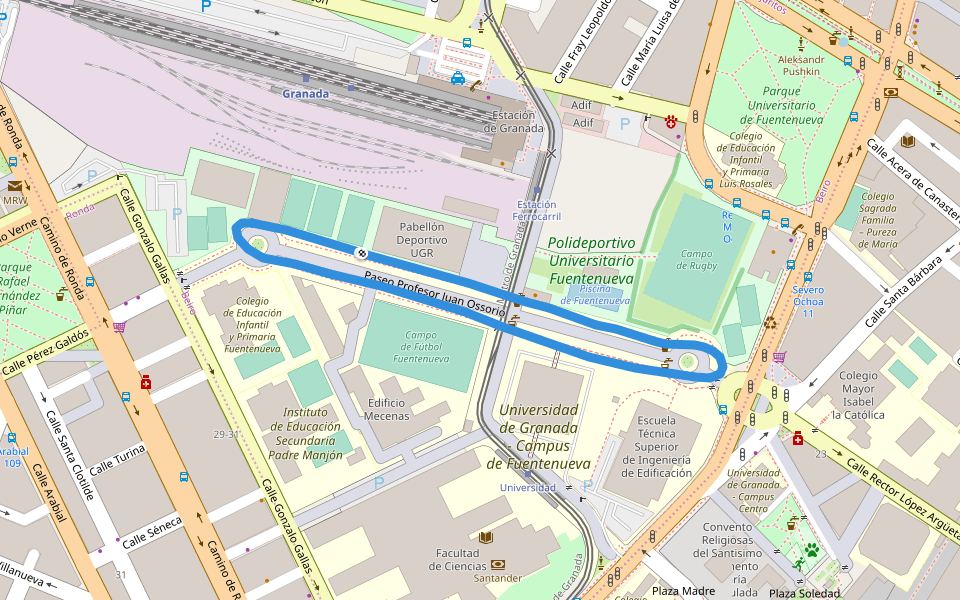
Fuentenueva: the ultimate university neighbourhood
If your faculty is on the Fuentenueva Campus, living here is like having a VIP pass: you’re steps away from class, the library, and the bars where university life happens. It’s a highly sought after area, with a young vibe and packed with student oriented shared flats.
It combines quiet with useful everyday services (cafés, bookshops, print shops, green spaces) and sits close to both Zaidín and the centre, so you won’t feel cut off from the city’s social life either. If your priority is focusing on your studies without fully giving up the atmosphere, this is a safe bet.
Camino de Ronda: the liveliest university corridor
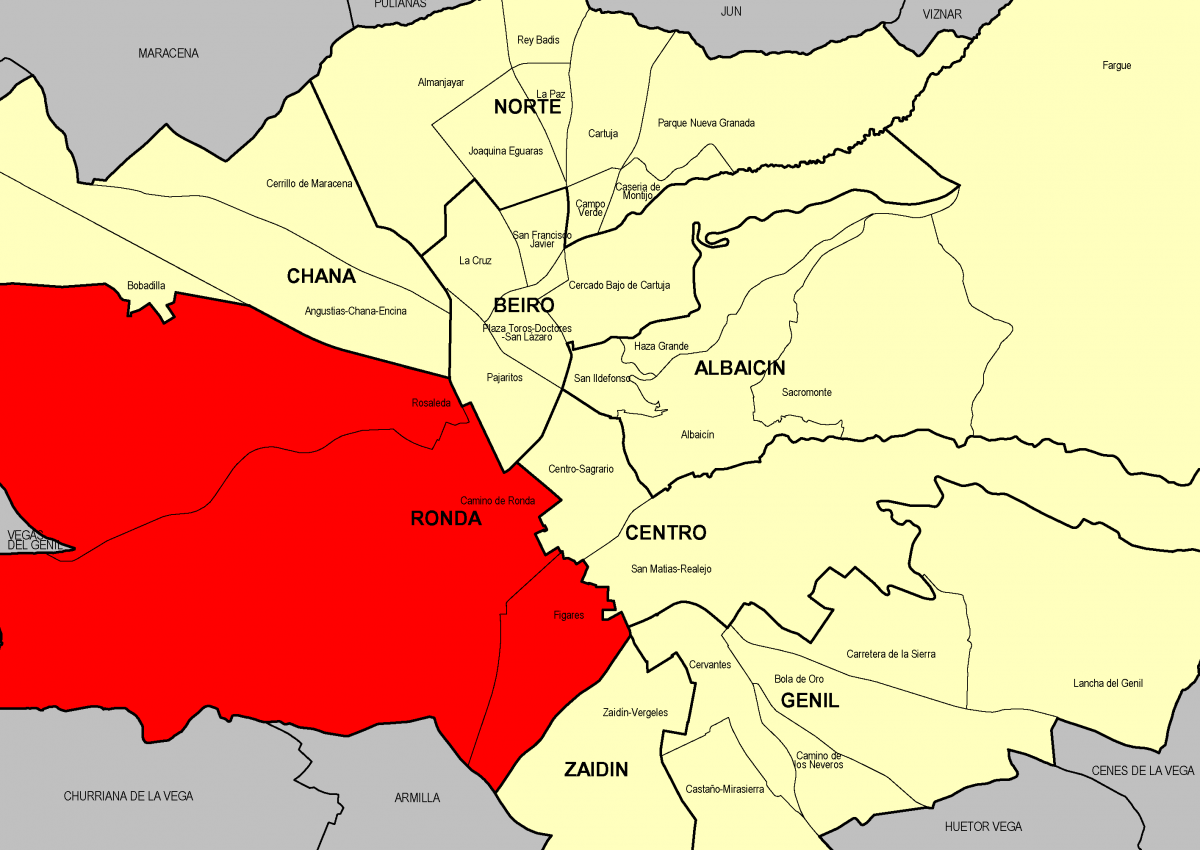
Camino de Ronda is Granada’s modern university zone par excellence. It’s got everything (shops, cafés, banks, gyms) and is served by the city’s metro line, letting you move quickly to both the centre and other neighbourhoods.
A few minutes away is Pedro Antonio de Alarcón, considered students’ favourite street for going out, packed with bars, pubs and clubs. Parque Federico García Lorca is also here, great for unwinding or exercising between classes. The Fuentenueva Campus is less than 2 km away, so many students walk or cycle to class.
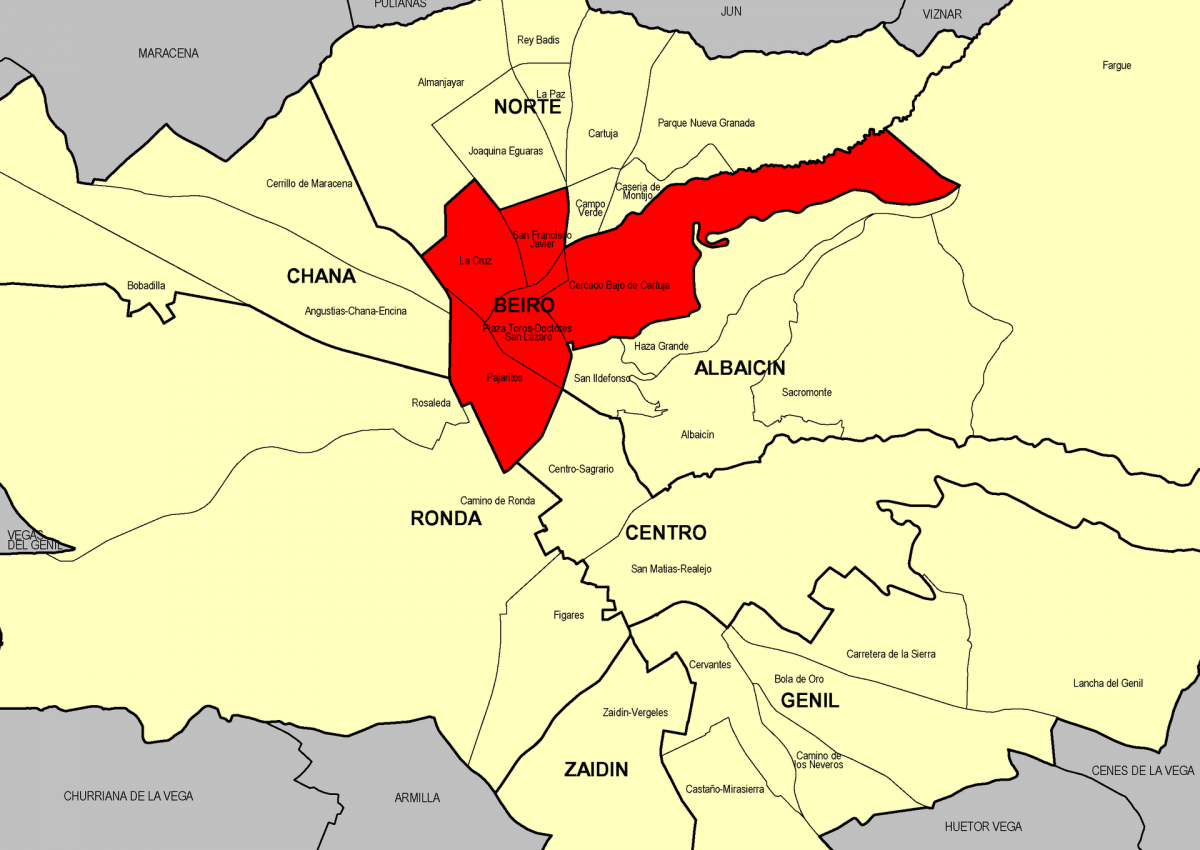
Plaza de Toros – Doctores – San Lázaro (Beiro): a young hub between faculties
This area, in the Beiro district, is one of the most recommended if you’re after a balance between study and going out. It has a lively atmosphere both day and night, and it’s home to much of UGR’s Centro Campus, while also being close to both Fuentenueva and Cartuja (both reachable in under half an hour on foot, or faster by bus).
The Plaza de Toros (bullring) marks the heart of the area, surrounded by tapas bars, clubs and venues popular with students. It has good bus connections, a metro stop, and the central train station is nearby. The closer you get to Cartuja from here, the lower rental prices tend to be.
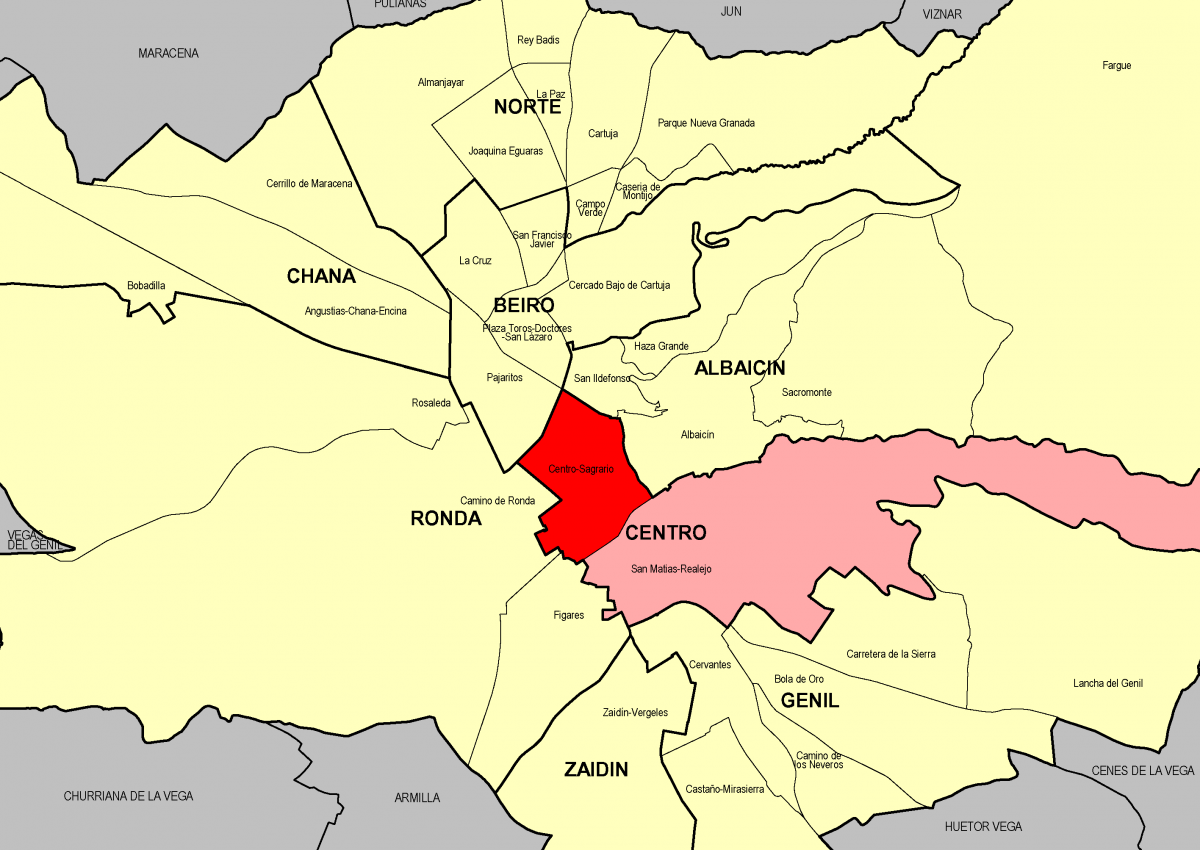
Centro: city life, history and everything within reach
Living in central Granada means having everything close: shops, bars, cultural life, transport… and, as a trade off, a bit more noise and tourism. It runs from Gran Vía and the Cathedral to the edge of Camino de Ronda, blending the traditional historic quarter with somewhat more modern areas towards streets like Arabial or Pedro Antonio de Alarcón.
This is where UGR’s Centro Campus sits, with several arts and humanities faculties, and the Fuentenueva Campus is just a few minutes’ walk away. Rents tend to run a bit higher than in outlying neighbourhoods, but many students value being able to walk to class and having spots like Plaza de la Trinidad, the Botanical Garden, or the San Agustín market right nearby.
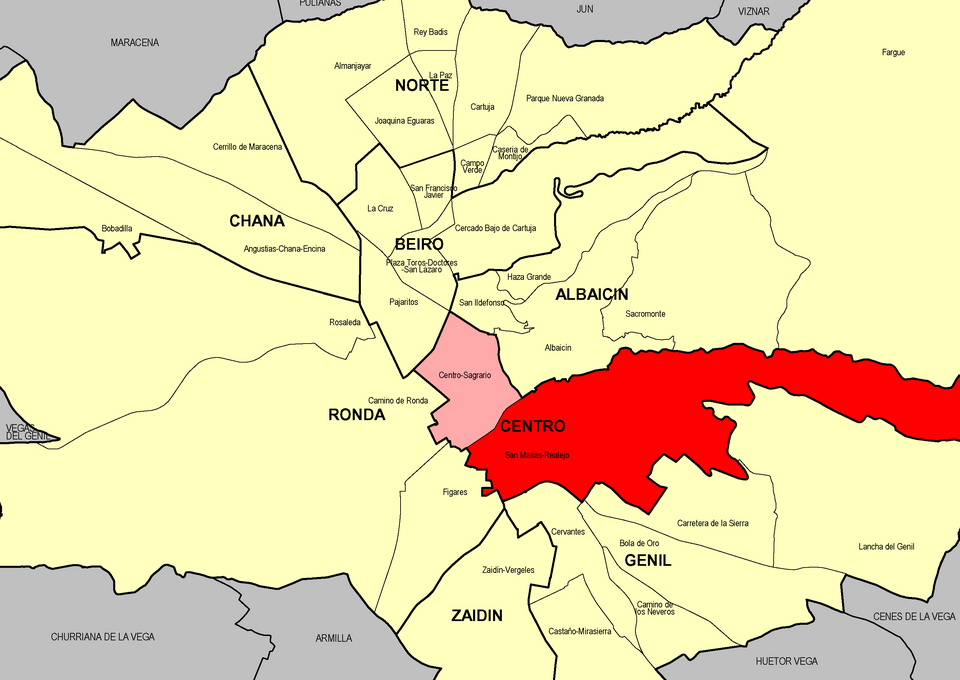
Realejo: bohemian charm at the foot of the Alhambra
Realejo is Granada’s former Jewish quarter, and today one of the favourites among university students, especially international ones. It sits at the foot of the Alhambra, with cobbled streets, charming squares, and that unmistakably bohemian air that blends the historic with the modern.
Plaza de Mariana Pineda and Campo del Príncipe are key meeting points, packed with tapas bars and restaurants. It’s ideal if you’re heading to the Centro Campus (15-20 minutes on foot), while both Cartuja and Fuentenueva are around 15 minutes away by bus. It also has beautiful spots for sunset, like the Lavadero de la Placeta Puerta del Sol, a classic among students for a drink with a view.
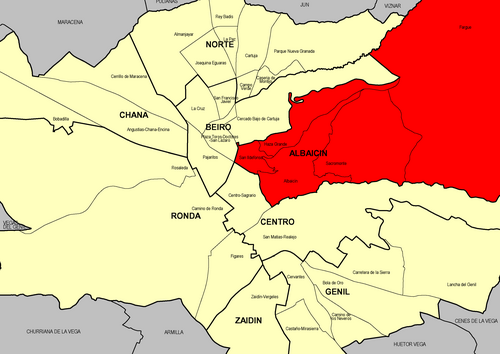
Albaicín: living history, with a few caveats
Albaicín, a UNESCO World Heritage Site, is one of the most distinctive neighbourhoods in all of Granada, with spectacular views of the Alhambra from viewpoints like San Nicolás. It’s a less common choice for everyday university life (pedestrian streets and limited car access complicate the logistics somewhat), but it draws students, especially international ones, looking for a different, quieter experience during the week and a livelier one on weekends thanks to tourism.
Keep in mind that, being one of the most beautiful (and visited) areas in Europe, prices here run higher than in other student neighbourhoods.
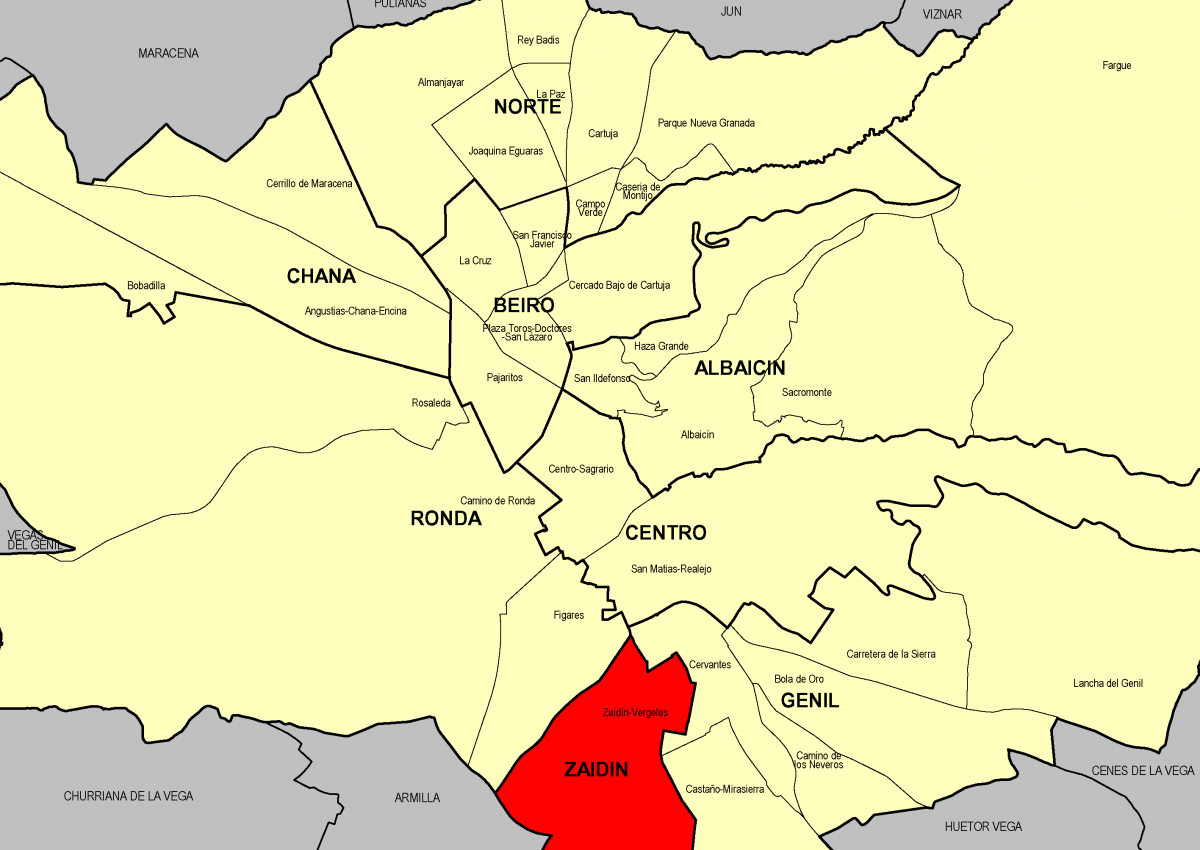
Zaidín: peace and quiet, sport, and more affordable prices
South of the centre, Zaidín is Granada’s largest neighbourhood and has gained huge popularity among students in recent years, especially since the opening of the Health Campus (PTS) and the new hospital. It combines the calm of being somewhat removed from the historic centre with modern amenities, wide avenues, and spacious parks.
Here you’ll find the Nuevo Los Cármenes Stadium (home to Granada CF), the Palacio de Deportes, and several sports complexes, making it a great area if you’re into sport. It also has two of the province’s largest shopping centres (Nevada Shopping and Serrallo Plaza) and a growing leisure scene. Rents tend to be more affordable than in the centre, making it a popular choice for tighter budgets.
Cartuja: a quiet academic setting
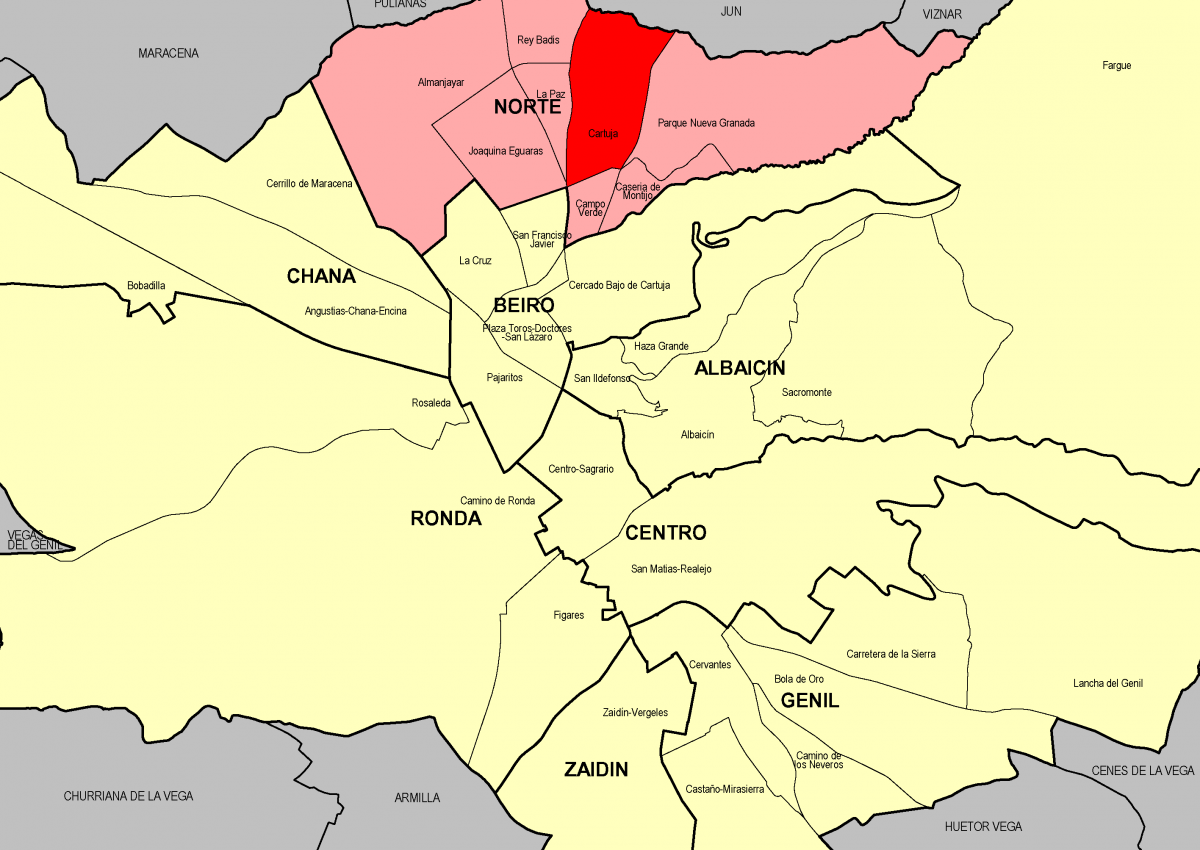
Located in the Norte district, Cartuja blends history and modernity, surrounded by green spaces and with the Cartuja Campus practically right next door. It’s a good option if you’re after peace and quiet without losing touch with university life, though it’s worth visiting before deciding, since building quality and connections can vary quite a bit from street to street.
La Chana: the most affordable, authentic option
La Chana is a traditional neighbourhood to the northwest of the city, a bit removed from the centre but highly valued by those looking to save money without fully giving up the atmosphere. It has a humble, welcoming character, with old-school tapas bars and all the basic services covered (supermarkets, pharmacies, health centre, municipal sports centre).
Although it’s further out, it’s well connected: several bus lines get you to the centre in about 15 minutes, and its proximity to the motorway also makes weekend getaways to Sierra Nevada easy, which in Granada are practically on your doorstep.

How to choose an area based on your campus
A quick summary to connect the theory with practice:
- Fuentenueva Campus: Fuentenueva, Camino de Ronda, or Zaidín.
- Centro Campus: Centro, Realejo, or Plaza de Toros-Doctores-San Lázaro.
- Cartuja Campus: Cartuja or the Norte/Beiro area.
- Health Campus (PTS): Zaidín, the most logical choice given the proximity.
- Aynadamar Campus: worth checking transport carefully, as it’s a bit further from the rest.
Things to consider before choosing a flat in Granada
- Proximity to campus: in a city the size of Granada, being able to walk or cycle to class makes a huge difference day to day.
- Transport connections: although Granada is very walkable, check bus lines and the metro line (which runs almost like a surface tram) if your neighbourhood is a bit further out.
- Atmosphere and services: supermarkets, libraries, gyms and social life near your flat matter far more day to day than a pretty landmark around the corner.
- Rental prices: the further you move from the historic centre, the lower prices generally get, though areas like Zaidín or La Chana show you can save money without fully losing touch with university life.